Portx: worth it for a fast logistics launch, not a flexible long-term build
- Trucking and freight companies
- Moving and delivery businesses
- Warehouse and storage providers
- Agencies launching logistics sites quickly
- You prefer Gutenberg over Elementor
- You need a very lightweight theme
- You are building a highly custom web application
- You dislike bundled plugins and demo setup work
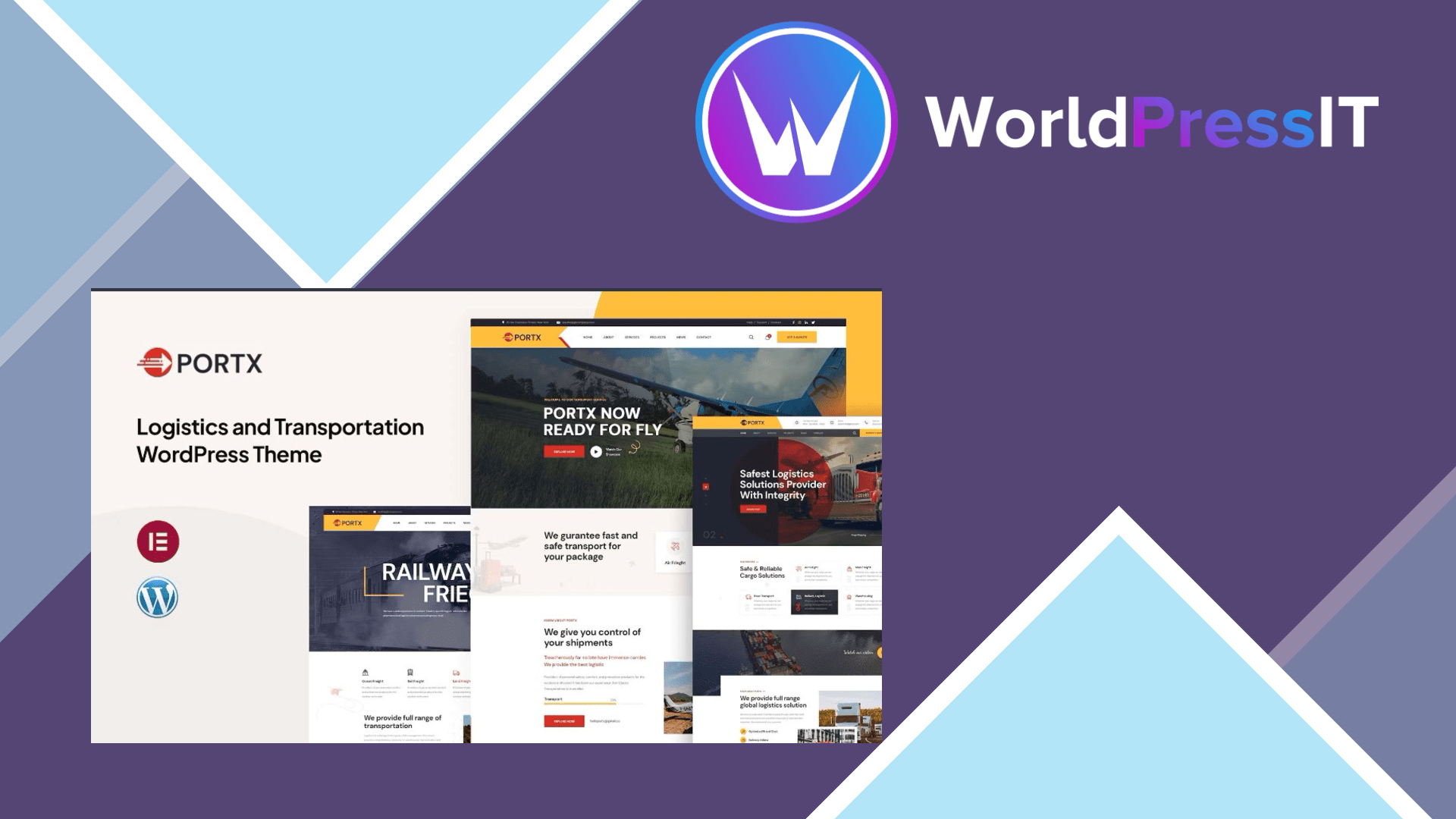
Portx is a niche business theme that gets the most important thing right: it gives transportation and logistics companies a credible starting point instead of making them assemble a generic corporate site from scratch. It includes three homepage designs, more than 20 inner pages, three header variations, one footer variation, WooCommerce compatibility, WPML compatibility, Contact Form 7 support, and more than 35 custom Elementor widgets. That is a solid amount of prebuilt material for a trucking company, freight forwarder, courier, warehouse, moving service, or packaging business.
The strongest reason to choose Portx is speed. The demos already use the visual language these businesses usually need: service blocks, quote-oriented calls to action, transport imagery, tracking-style sections, team and company pages, and layouts that can be adapted without writing much code. Elementor also makes the content editable for non-developers, while the included child theme gives developers a safer place to override templates. The current product page lists the theme at $79 and includes six months of support plus future updates, which is reasonable if the design saves several hours of setup work.
The documentation is more useful than the usual one-page installation guide. It documents the required server settings, including a recommended 128 MB memory limit, 180-second maximum execution time, 64 MB post size, 32 MB upload size, and 3,000 maximum input variables. It also explains installation, updates, required plugins, translation, and demo importing. That level of specificity is a genuine positive, especially because the theme depends on several bundled plugins and the TP Core plugin for much of its functionality.
There is an important catch with the demo workflow. The recommended one-click import removes existing data and can replace menus and Customizer settings, so it should only be used on a fresh installation. The documentation says roughly 5% of customers have encountered automatic-import problems caused by hosting limits, with manual import or support required afterward. That is not a deal-breaker, but it means “one click” is not the same as a risk-free launch process.
Portx also feels less future-facing than themes built around the WordPress block editor. Its listing explicitly says it is not Gutenberg optimized, while the core experience is centered on Elementor, Bootstrap, custom widgets, and bundled theme functionality. Compared with Astra or Kadence paired with Elementor, Portx gives you a much faster niche-specific starting point but less freedom to keep the site lean and independent of theme-specific components. Compared with Hello Elementor, it offers far more finished logistics layouts, but Hello is a cleaner foundation for a custom design. Compared with heavier all-purpose themes such as Avada, Portx is more focused and easier to justify for a small logistics brochure site, though it has a smaller ecosystem and a much smaller user base.
The support record is mixed but not alarming. The public discussion includes prompt author replies, yet one early buyer reported installation errors and requested a refund, while another recent question concerned a mobile logo that did not link to the homepage. Those are specific reminders to test mobile navigation, demo imports, and plugin compatibility before committing to a production build.
Verdict: Portx is a sensible shortcut for an Elementor-based logistics website, especially when the demo structure closely matches the business. It is not the best foundation for a performance-sensitive, Gutenberg-first, or heavily customized site; in those cases, Astra, Kadence, or Hello Elementor will usually age better.
Questions people ask
- Is Portx a good WordPress theme for a trucking company?
- Yes, if you want a ready-made trucking or logistics design and plan to use Elementor. Its niche pages and custom widgets reduce the amount of layout work required.
- Does Portx work with Elementor?
- Yes. Elementor is the theme’s main page-building workflow, and Portx includes more than 35 custom Elementor widgets.
- Can I import the Portx demo on an existing website?
- You can, but the documentation warns that the one-click import can remove existing data and replace menus and Customizer settings. Use it on a fresh site or use the manual import method.
- Is Portx optimized for Gutenberg?
- No. The product listing marks Portx as not Gutenberg optimized, so it is better suited to Elementor users than block-editor-first websites.
Get Portx: worth it for a fast logistics launch, not a flexible long-term build 2.1.2
Complete package, ready to install, via WorldPressIT.