Bricks Theme: worth it for builders, not casual editors
- WordPress freelancers and agencies
- Developers who know CSS
- Performance-focused business websites
- Custom WooCommerce builds
- Dynamic content websites
- You want the easiest beginner builder
- Clients will freely edit layouts
- You need a large third-party widget ecosystem
- You are unwilling to rebuild an existing Elementor site
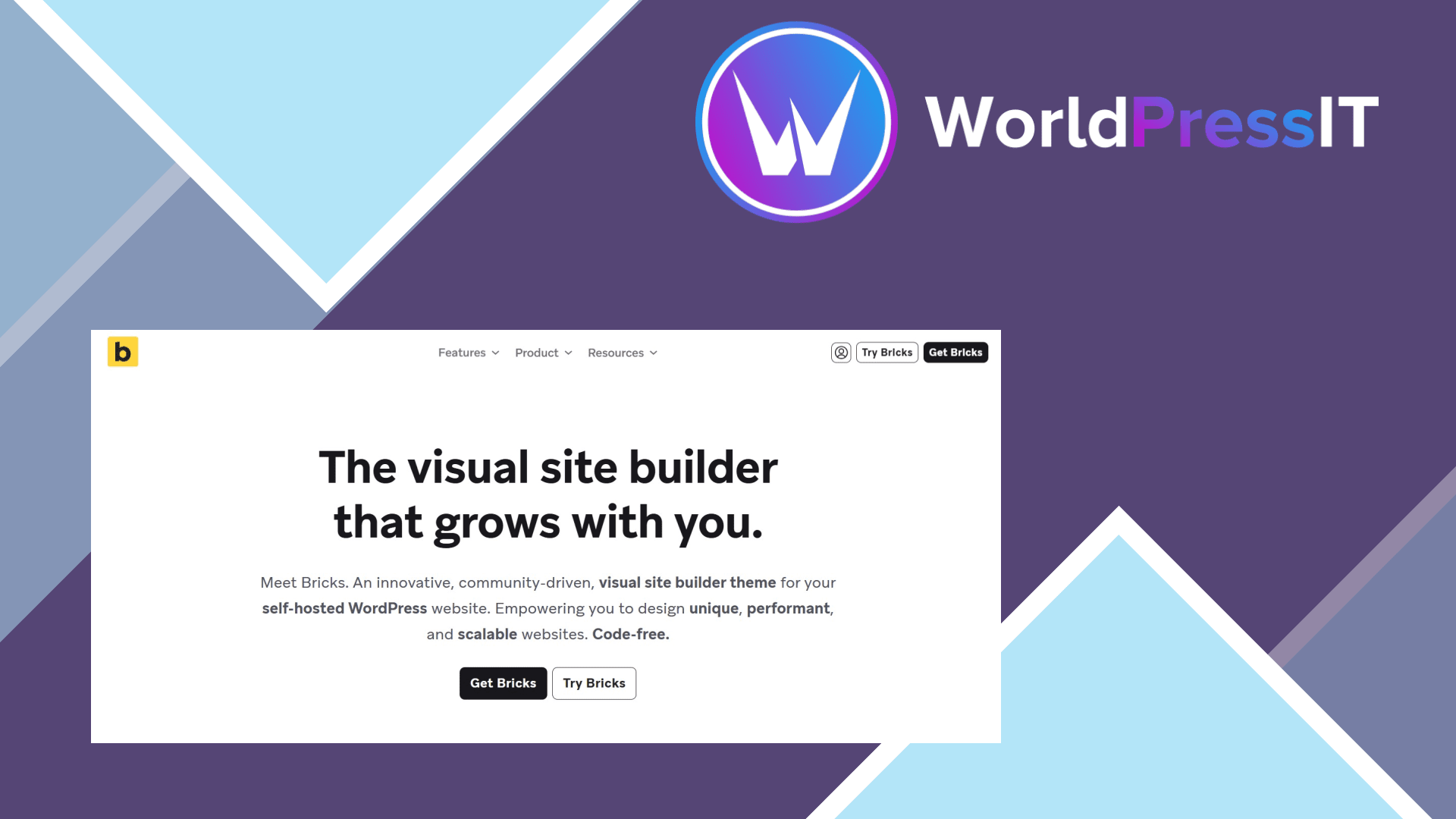
Bricks Theme is a visual site builder that replaces the usual WordPress theme-and-page-builder combination. It lets you build headers, footers, templates, archives, WooCommerce screens, popups, menus, forms, and ordinary pages in one interface. Its main appeal is control: Flexbox and CSS Grid layouts, global classes, variables, responsive breakpoints, dynamic data, custom code, conditions, interactions, and a built-in query loop system are all part of the product rather than separate paid extensions.
That makes Bricks genuinely strong for custom websites. You can create a single card design and use a query loop to repeat it for posts, products, users, taxonomy terms, API responses, or custom-field data. The same system supports AJAX pagination, load more buttons, and infinite scroll. The WooCommerce builder also goes well beyond styling a product page: it can visually control shop, archive, cart, checkout, account, and related store templates. For agencies, the global class and template workflow is more maintainable than styling every element independently.
Bricks also has a credible performance advantage over heavier builders such as Elementor and Divi, although it is not magic. The output still depends on your images, fonts, animations, plugins, hosting, and how many nested elements and queries you add. Compared with Oxygen, Bricks offers a friendlier modern interface and a more active-feeling ecosystem while retaining a developer-oriented approach. Compared with Gutenberg or GeneratePress plus blocks, it gives you far more visual control, but at the cost of a more proprietary editing workflow.
Where Bricks is genuinely good
- Responsive editing is unusually flexible, with custom breakpoints and device-specific changes.
- Dynamic data, conditions, query loops, and WooCommerce templates are integrated instead of being scattered across add-ons.
- The builder supports custom HTML, CSS, JavaScript, and PHP for projects that outgrow no-code controls.
- Reusable classes, variables, templates, and components make large builds easier to standardize.
- All plans include the full feature set, including more than 110 elements, rather than reserving core tools for a higher tier.
Where it is weak or annoying
The learning curve is real. Bricks expects you to understand containers, nesting, inheritance, CSS sizing, breakpoints, classes, and WordPress template logic. A beginner can use it, but the claim that it makes website creation effortless is overstated. Initial setup also takes longer because a good build benefits from defining global colors, spacing, typography, and classes before producing pages.
Client handoff is another weakness. Bricks includes controls for limiting builder access, but the full editor is still too powerful and complicated for many clients who only want to change a heading, image, or opening-hours field. A structured content setup using custom fields can solve this, but it adds development work. Existing Elementor, Divi, or Oxygen sites should not be treated as quick conversions; in practice, moving to Bricks usually means rebuilding templates and layouts.
There are also technical gotchas. Bricks documents a minimum WordPress memory limit of 64 MB and recommends 512 MB. Its query-loop features rely on generated HTML comments for AJAX pagination, filters, load more, and infinite scroll, so an optimization plugin that strips all HTML comments can break those functions. That is a specific maintenance issue, not merely a theoretical concern.
Pricing is reasonable for professional use: the current Starter plan is $79 per year for one website, while the Ultimate Lifetime plan is $599 once for unlimited websites. The lifetime option makes Bricks especially attractive to agencies, but a single small brochure site may not justify learning a developer-focused system when Elementor, Divi, or the block editor can get the job done faster.
Questions people ask
- Is Bricks Theme good for beginners?
- It is usable by beginners, but it is not beginner-first. You will learn faster if you already understand basic CSS, responsive layouts, and WordPress templates.
- Is Bricks faster than Elementor?
- Bricks generally produces a leaner starting point than Elementor, but real performance still depends on the site structure, images, plugins, hosting, and optimization settings.
- Can Bricks replace Elementor?
- Yes for new builds, especially when you want more control and fewer builder add-ons. Existing Elementor sites normally need substantial rebuilding rather than an automatic conversion.
- Is Bricks good for WooCommerce?
- Yes. Its WooCommerce builder can visually customize shop, product, archive, cart, checkout, account, and related templates, making it a strong choice for custom stores.
- Does Bricks have a lifetime license?
- Yes. The current Ultimate Lifetime plan costs $599 once and includes unlimited websites, future updates, and technical support.
Get Bricks Theme: worth it for builders, not casual editors 2.4.1
Complete package, ready to install, via WorldPressIT.