San Francisco: worth it for WPBakery sites, not modern block builds
- IT and technology agencies
- WPBakery-based client websites
- Creative portfolios and studios
- Businesses starting from a prebuilt demo
- You want a Gutenberg-first workflow
- You need a lightweight performance-focused theme
- You want portable content independent of the theme
- You prefer Elementor or native WordPress blocks
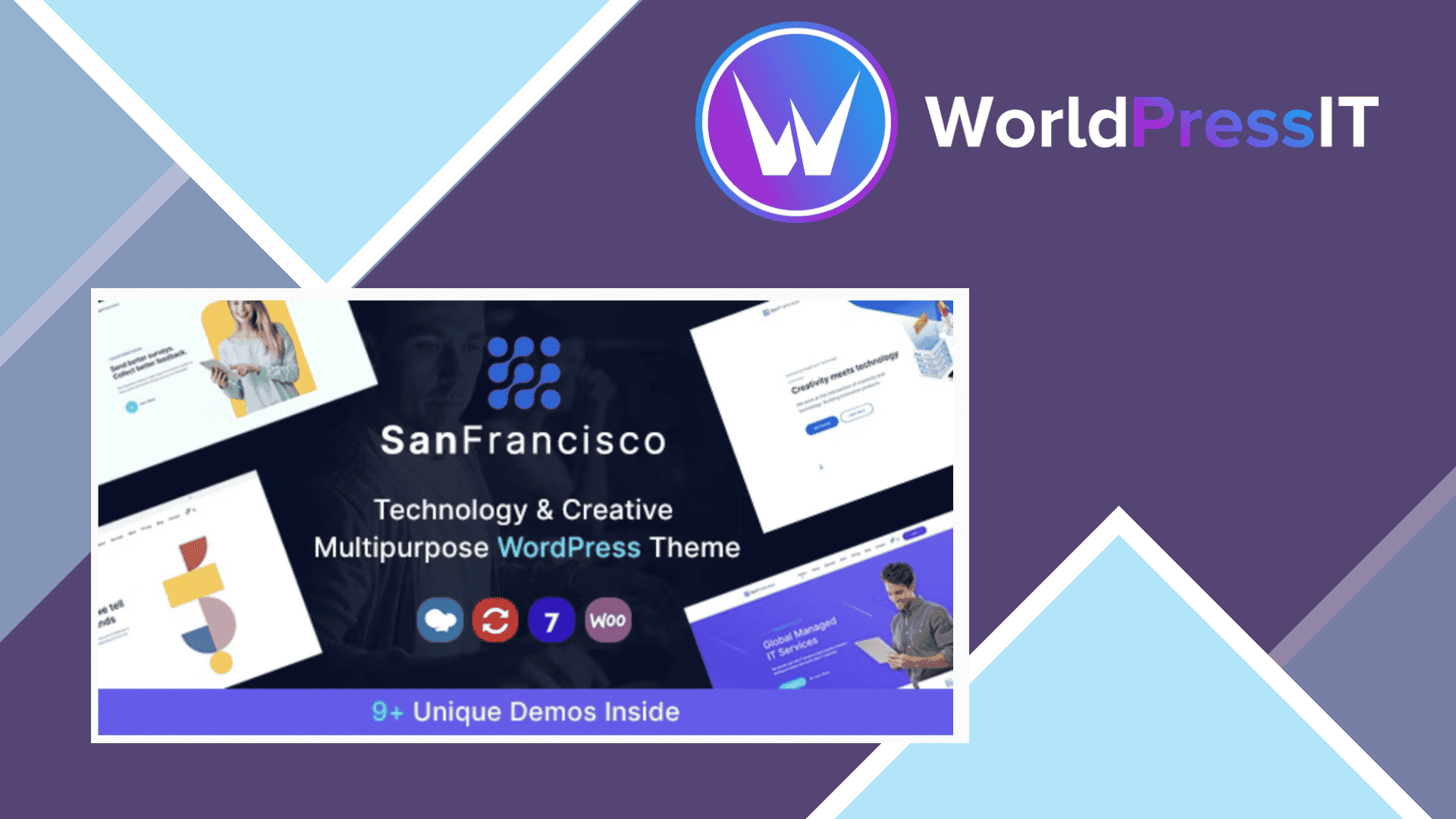
San Francisco is a usable but highly specific purchase. It is built for the classic ThemeForest workflow: choose one of more than nine demos, install the bundled plugins, import the content, and reshape the result with WPBakery. That approach still works well for agencies, IT companies, software businesses, portfolios, and brochure sites that need a polished look quickly. It is less appealing if you want a lean theme that follows the direction of modern WordPress.
Where San Francisco is genuinely strong
The theme gives you a lot of starting material. The developer provides demos for technology, IT services, digital agencies, apps, consulting, software, communication, and portfolios, along with blog, shop, gallery, and project layouts. Its WPBakery integration includes more than 70 theme-specific elements, while Revolution Slider is bundled as well. WooCommerce support, Contact Form 7 compatibility, WPML and Polylang compatibility, custom headers, mega menus, sticky navigation, one-page layouts, and custom post types make it flexible enough for a broad range of small business sites.
The native WordPress Customizer is another practical advantage. You can change many colors, fonts, headers, layouts, and page-level settings without editing theme files. The documentation is unusually concrete about setup, covering installation, demo imports, menus, widgets, custom post types, translations, Mailchimp, child themes, and troubleshooting. The developer also continues to publish updates; the current marketplace listing shows a recent update with PHP 8.x support and refreshed WPBakery, Revolution Slider, WooCommerce, and WordPress compatibility.
Where it becomes difficult
The main weakness is architectural rather than cosmetic. San Francisco is marked “Gutenberg Optimized: No,” and its page-building experience depends on WPBakery plus custom theme elements. That makes the site harder to migrate later to native blocks, another builder, or a different theme. Portfolio, team, testimonial, and partner content is also handled through theme-specific custom post types, so switching themes can leave important content behind in a format that needs cleanup.
The setup is not as effortless as “one click” suggests. The documentation says demo imports may require server changes including a 3,000M memory limit, a 2,000M post size, a 64M upload limit, and longer execution timeouts. Those figures are unusually demanding and may require hosting support. The same documentation recommends manually replacing theme and bundled plugin folders over FTP for updates. That is workable for developers, but annoying and risky for site owners who expect a straightforward update process.
How it compares
Compared with Astra, Kadence, or GeneratePress, San Francisco offers more predesigned niche layouts and deeper bundled WPBakery styling, but it is heavier and less future-proof. Compared with Avada, it is cheaper and less ecosystem-heavy, but Avada has a more unified builder experience. If you specifically want Elementor, look elsewhere; San Francisco is designed around WPBakery. The current regular license is listed at $59 and includes six months of support, so it can be reasonable for a one-off client build. For a long-lived site that values portability, speed, and native editing, the obvious alternatives are better.
Questions people ask
- Is San Francisco a Gutenberg theme?
- No. The marketplace listing marks San Francisco as not Gutenberg Optimized. Its main editing workflow is based on WPBakery and theme-specific elements.
- Does San Francisco include WPBakery?
- Yes. WPBakery Page Builder is bundled, along with more than 70 custom elements built for the theme.
- Is San Francisco good for WooCommerce?
- It includes custom WooCommerce shop layouts and is marketed as WooCommerce compatible. It is suitable for a small or medium catalog, but it is not a dedicated e-commerce theme.
- Can I import San Francisco demo content with one click?
- The theme includes a one-click demo importer, but the documentation warns that imports may require higher PHP memory, upload, post-size, and execution-time limits.
- Will my content remain if I change themes?
- Normal WordPress posts and pages should remain, but theme-specific portfolio, team, testimonial, partner, and builder content may require migration or cleanup.
Get San Francisco: worth it for WPBakery sites, not modern block builds 1.31
Complete package, ready to install, via WorldPressIT.