Agrikole: worth it for a fast farm-site launch, not long-term flexibility
- farm and agriculture businesses
- organic food shops
- freelancers building client sites
- WooCommerce farm stores
- WPBakery users
- you want a Gutenberg-first theme
- you prefer lightweight themes
- you dislike bundled page builders
- you need highly portable content
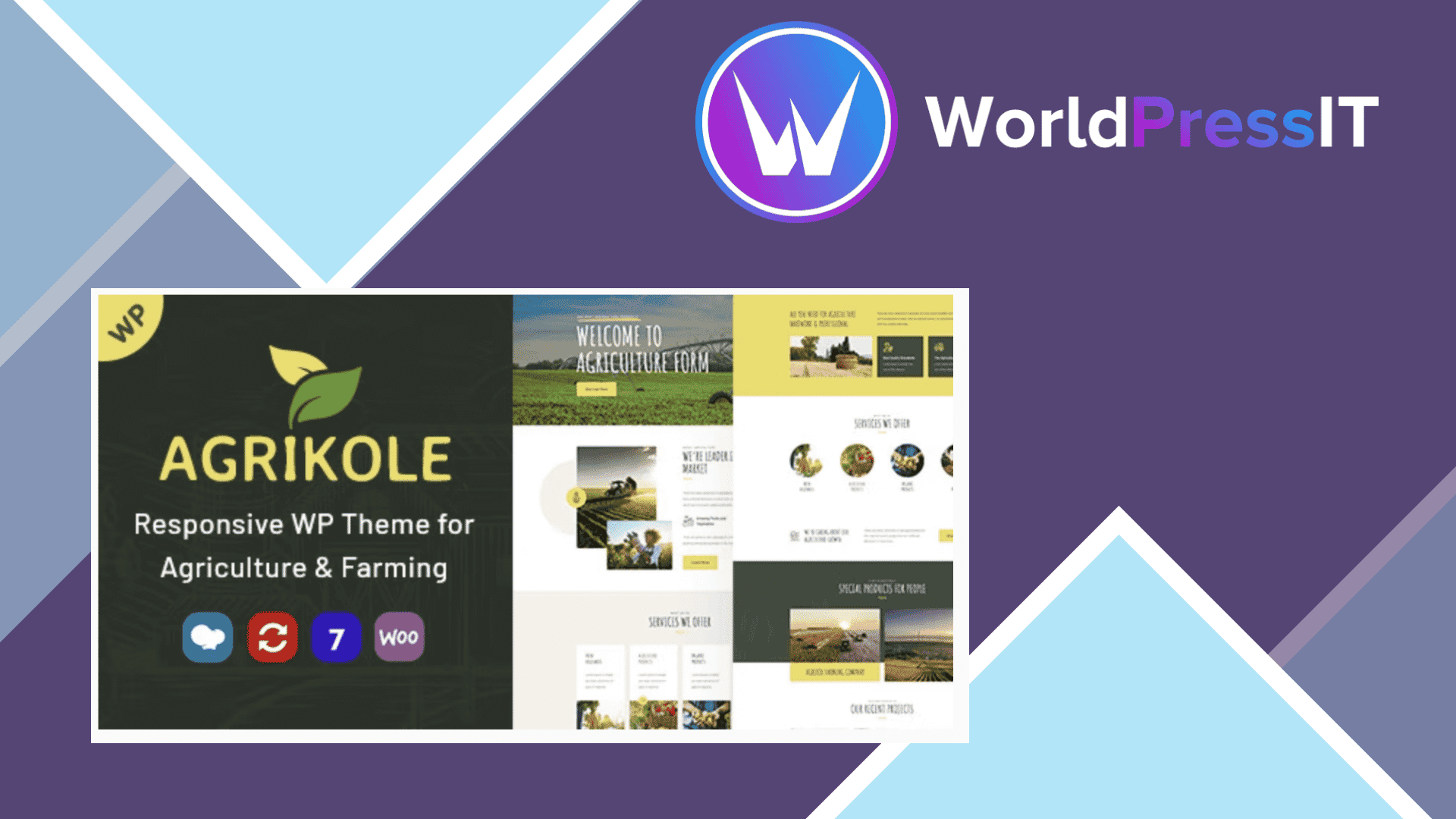
Agrikole is a good-looking shortcut, not a future-proof WordPress foundation. It is designed specifically for farming, agriculture, organic food, dairy, vegetable, and rural business websites, and its demos are much closer to those use cases than the generic layouts supplied by multipurpose themes. The theme includes more than five homepage designs, WooCommerce shop layouts, portfolio and gallery templates, custom post types for items such as team members and testimonials, and bundled WPBakery and Revolution Slider integrations.
That focus is Agrikole’s genuine strength. A freelancer can import a starting site, replace the photography and copy, adjust colors in the native WordPress Customizer, and produce a credible farm or food-business website without designing every section from scratch. The documentation is unusually practical about the setup process: demo content is imported from the dashboard, but Revolution Slider data must be imported separately. The theme also includes a child theme, Contact Form 7 integration, multilingual compatibility, sticky headers, mobile-header settings, and WooCommerce styling.
The documentation exposes an important limitation: Agrikole is built around WPBakery rather than the block editor. Its custom post types use the classic editor by default, and the documentation says you must enable WPBakery for those post types through WPBakery’s Role Manager. That is manageable for an experienced builder, but it creates extra configuration and makes the site more dependent on the theme’s custom elements. If you later switch themes, much of the page structure and content formatting will need cleanup.
Where Agrikole is strong
- Fast visual results: the agriculture-specific demos, sliders, headers, and page sections give you a useful starting point rather than an empty canvas.
- Client-site convenience: the included child theme, Customizer controls, custom post types, and bundled premium plugins cover common agency requirements.
- WooCommerce support: it is suitable for selling produce, subscriptions, packaged food, or farm products without adding a separate shop theme.
- Support track record: public marketplace feedback repeatedly praises fast, effective support, although one reviewer specifically notes that customization is limited in some areas.
Where it is weak
The setup is heavier than the sales copy suggests. Ninzio’s own troubleshooting guide recommends increasing PHP limits substantially for installation and demo import, including a 3,000M memory limit, 2,000M post size, and 180-second execution time. Those figures are a warning that importing the full demo may require hosting adjustments. The documentation also contains aging instructions, including obsolete-looking references to Twitter developer setup and the WPLANG constant.
Agrikole is also explicitly marked as not Gutenberg optimized. That makes Astra, Kadence, and GeneratePress better choices for a new site where native blocks, performance, and theme independence matter more than a ready-made farming aesthetic. Those alternatives require more design work, but they are generally easier to keep lean and redesign over time. Compared with another niche agriculture theme, Agrikole’s advantage is its established WPBakery workflow and clearly documented demo process, not modern editing.
Verdict: buy Agrikole when the goal is to launch a conventional farm or organic-food website quickly and the site will remain within its existing design system. Skip it for a long-lived content platform, a performance-sensitive build, or anyone who wants Gutenberg and portable content from day one.
Questions people ask
- Is Agrikole good for a farm website?
- Yes. Its agriculture-specific demos, page sections, galleries, team layouts, testimonials, and WooCommerce templates make it a practical fit for farm and organic-food businesses.
- Does Agrikole use Elementor?
- No. Agrikole is built around WPBakery Page Builder, with more than 70 custom elements advertised for the theme.
- Is Agrikole compatible with WooCommerce?
- Yes. WooCommerce integration and custom shop layouts are included, making it suitable for selling produce, food products, or farm-related goods.
- Is Agrikole Gutenberg compatible?
- It can run on modern WordPress versions, but the product page marks it as not Gutenberg optimized. Its main editing workflow remains WPBakery and the classic WordPress Customizer.
- Why is Agrikole demo import difficult?
- The theme documentation says demo import can require higher hosting limits, including a recommended 3,000M memory limit and 180-second execution time. Revolution Slider content also has to be imported separately.
Get Agrikole: worth it for a fast farm-site launch, not long-term flexibility 1.30
Complete package, ready to install, via WorldPressIT.