Sober: worth it for design-led WooCommerce stores, not lean builds
- fashion and lifestyle shops
- design-led WooCommerce stores
- agencies starting from a demo
- stores needing multiple product layouts
- you want a block-first theme
- site speed is the top priority
- you dislike bundled page builders
- you need minimal theme lock-in
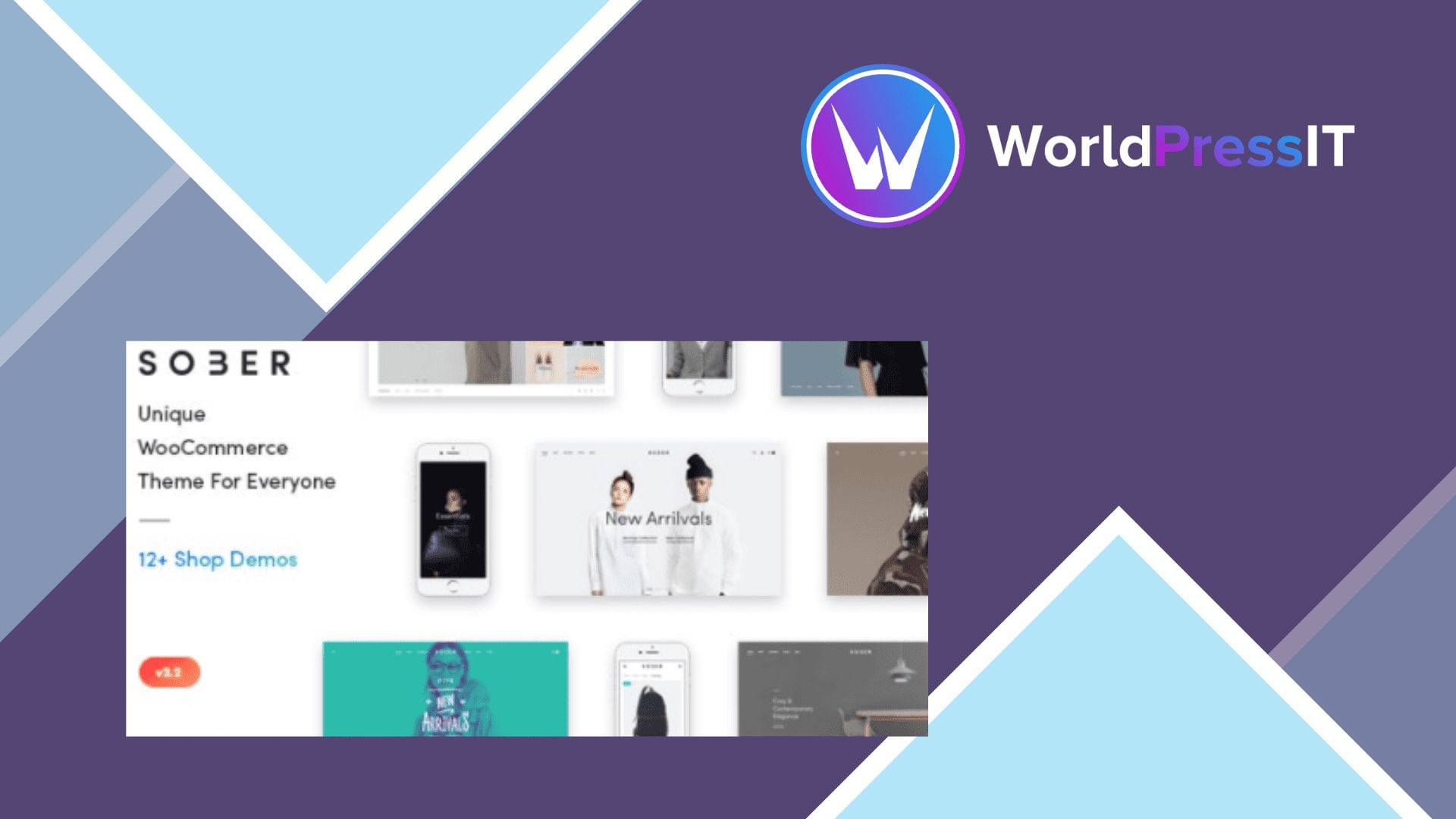
Sober is a good-looking WooCommerce theme with a clear target: stores that want a finished visual identity quickly. It ships with more than 16 homepage demos, six header layouts, three shop layouts and multiple single-product layouts. The designs lean toward fashion, furniture, cosmetics, accessories and lifestyle retail, but the underlying WooCommerce features also cover digital products, variable products, affiliate products, coupons, product filtering, catalog mode and order tracking. The result is a theme that can get a presentable shop online faster than starting from a blank theme.
Its strongest feature is the breadth of its storefront presentation. The developer provides different product-page layouts, product hover styles, quick view, sticky-header options, mega menus and a range of pre-built shop pages. Sober also supports both Elementor and WPBakery, which gives you a choice of editing workflows and makes it easier to reuse an existing agency process. The developer maintains a separate documentation site and support system, while the marketplace listing promises future updates and six months of support with the regular license. ([themeforest.net](https://themeforest.net/item/sober-woocommerce-wordpress-theme/18332889))
There is also evidence that the theme is still actively maintained rather than abandoned. The current listing records version 3.6.7, released on September 18, 2026, with WooCommerce template and bundled-plugin updates. Earlier 2026 releases fixed checkout-block styling, a checkout login template problem and a broken-access-control issue in the theme’s menu data handler. That update activity matters for a WooCommerce theme, because outdated template overrides can quietly break cart, checkout or account screens after WooCommerce updates. ([themeforest.net](https://themeforest.net/item/sober-woocommerce-wordpress-theme/18332889))
The weakness is architectural. Sober offers Elementor and WPBakery rather than committing to one clean editing system, and its feature list depends on several companion components for variation swatches, wishlists, comparison features, sliders and custom fields. That is convenient at launch but creates more dependencies to update, troubleshoot and eventually replace. The documentation is described as comprehensive, but even the developer’s own customer testimonials include a complaint that it should contain more information. A third-party integration guide also exists specifically to replace Sober’s native search interface, which suggests that extending the theme sometimes requires theme-specific work rather than ordinary WooCommerce configuration. ([uix.store](https://uix.store/intro/sober/))
Security history is another reason not to install it and forget it. Wordfence lists an unauthenticated information-exposure vulnerability affecting versions up to 3.5.11, patched in 3.5.12, and a missing-authorization issue affecting versions up to 3.5.12. The current changelog records a later security fix, but that history makes disciplined updates essential. Older support discussions also show failures involving bundled Revolution Slider versions, while a WPML discussion documents product-page layout problems with Sober and WooCommerce Multilingual. These are not automatic deal-breakers, but they are exactly the sort of maintenance friction that matters on a revenue-generating store. ([wordfence.com](https://www.wordfence.com/threat-intel/vulnerabilities/wordpress-themes/sober?utm_source=openai))
Compared with Storefront, Sober gives you far more visual polish out of the box but less simplicity. Compared with Astra or Kadence, it is more opinionated and more dependent on its own layouts and extensions. Compared with Flatsome, it has a similar all-in-one marketplace feel, but Sober offers both Elementor and WPBakery instead of centering the experience around one proprietary builder. Buy it when the demos closely match your store and the design savings are real; skip it when you want a fast, native WordPress build that will remain easy to customize years from now.
Questions people ask
- Is Sober a good WooCommerce theme?
- Yes, for design-led stores that want ready-made shop layouts, product pages and ecommerce features. It is less attractive if you want a minimal theme with few dependencies.
- Does Sober work with Elementor?
- Yes. The developer lists Elementor support alongside WPBakery, and the theme includes pre-built layouts for both editing approaches.
- Is Sober fast?
- It can perform adequately with careful hosting, image optimization and plugin choices, but its builders, sliders and companion features make it a less naturally lean starting point than Storefront, Astra or Kadence.
- Is Sober safe to use?
- Only if it is kept current. Older Sober releases had documented information-exposure and missing-authorization vulnerabilities, so updating the theme and its bundled plugins should be treated as mandatory.
Get Sober: worth it for design-led WooCommerce stores, not lean builds 3.6.6
Complete package, ready to install, via WorldPressIT.