WoodMart: worth it for feature-heavy stores, not speed purists
- feature-rich WooCommerce stores
- agencies building multiple store designs
- catalogs needing custom product layouts
- Elementor, Gutenberg, or WPBakery users
- store owners who value visual control
- you want the lightest possible theme
- you need a very simple dashboard
- your site has limited hosting resources
- you dislike theme-specific lock-in
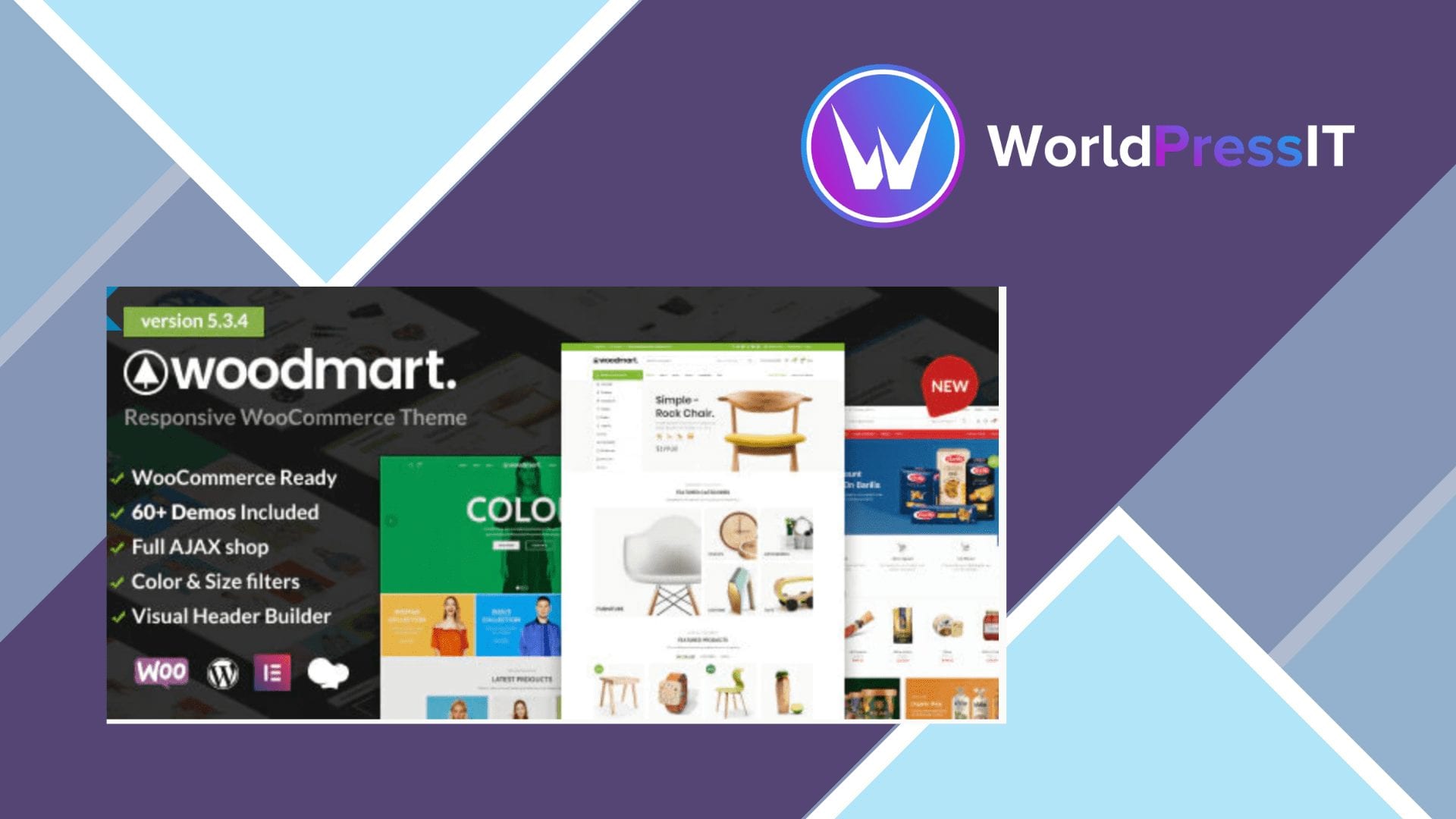
WoodMart is worth it when your WooCommerce store needs more than a basic product grid. It combines prebuilt store designs with custom builders for headers, footers, product pages, shop archives, carts, checkout, My Account pages, popups, and product cards. That makes it unusually capable out of the box. You can import a complete store, then reshape the important parts visually instead of assembling separate plugins for every merchandising feature.
The strongest reason to choose WoodMart is its control over store layouts. Its Layouts Builder can target individual products, categories, tags, brands, attributes, and product types, so a clothing category can use a different product page from a furniture category. The theme supports Gutenberg, Elementor, and WPBakery, and its documentation confirms that Elementor Free is sufficient for WoodMart layouts; Elementor Pro Theme Builder is not required for that feature. WoodMart also includes its own blocks, widgets, and elements for product grids, filters, swatches, galleries, comparison, wishlists, AJAX shopping features, and other common store requirements.
That breadth is useful for stores where design and conversion features matter more than minimalism. A retailer can build custom product cards, create category-specific templates, add swatches, and control checkout presentation without immediately buying several add-ons. The included template library and prebuilt websites also shorten the path from installation to a recognizable shop. The official product listing currently advertises more than 500 theme settings, more than 40 custom components for each supported builder category, lifetime updates, and six months of developer support with the regular license.
The weakness is that WoodMart is not automatically “super-fast” simply because it has performance settings. Its own documentation says real performance depends on page structure, images, plugins, caching, and hosting. Independent testing and user discussions repeatedly describe the theme as heavy when paired with elaborate demos, Elementor, large catalogs, or many enabled modules. A WoodMart support-forum report measured thousands of repeated attribute-related calls on a test installation, while users on Reddit commonly describe needing good hosting, caching, and selective feature disabling. Treat those reports as warnings rather than proof of a universal problem, but they make the speed claim impossible to accept at face value.
There is also a maintenance cost. WoodMart custom layouts can replace standard WooCommerce template structure, which means third-party plugin output attached to WooCommerce hooks may disappear until you add the relevant hook element back into the layout. The developer documents this behavior clearly, but it is still an extra troubleshooting step. File customizations also need a child theme, and the developer explicitly says custom code and child-theme modifications are outside normal support.
Compared with Flatsome, WoodMart offers broader builder choice and more granular WooCommerce layout control, while Flatsome generally feels more opinionated and unified. Compared with Shoptimizer, WoodMart wins on design flexibility and built-in features, but Shoptimizer is the safer shortlist for stores where speed and conversion-focused defaults matter most. Compared with Kadence, WoodMart is more ecommerce-specific and visually comprehensive, while Kadence is usually the cleaner foundation for a lighter, more modular build.
Verdict: buy WoodMart for a complex store that will actually use its feature set and has competent hosting or development support. Skip it for a small shop that mainly needs fast pages, a few templates, and minimal ongoing configuration.
Questions people ask
- Is WoodMart a fast WooCommerce theme?
- It can be optimized to perform well, but it is not lightweight by default. Large demos, page-builder content, enabled modules, images, plugins, hosting, and caching all have a meaningful effect.
- Does WoodMart require Elementor Pro?
- No. WoodMart's documentation says Elementor Free is sufficient for its custom layouts. Elementor Pro Theme Builder is a separate feature and is not required for WoodMart's Layouts Builder.
- Can WoodMart customize WooCommerce checkout?
- Yes. WoodMart includes a checkout builder, but custom layouts can affect WooCommerce hooks used by payment, shipping, and other extensions. Those hooks may need to be added manually.
- Is WoodMart good for a large product catalog?
- It is capable of handling complex catalogs and offers strong product filtering, layouts, and merchandising controls. You should still test real catalog sizes on staging and tune caching, hosting, images, and unused theme modules.
- Does WoodMart include lifetime updates?
- The current product listing includes lifetime auto-updates. The regular license also includes six months of support, with longer support available separately.
Get WoodMart: worth it for feature-heavy stores, not speed purists 8.5.7
Complete package, ready to install, via WorldPressIT.