MainWP: worth it for agencies that want control
- WordPress freelancers
- Small web agencies
- Self-hosting advocates
- Owners of many personal sites
- Developers who need customization
- You want a hands-off cloud service
- You manage only one or two sites
- You do not want another WordPress installation
- You need turnkey backup and reporting
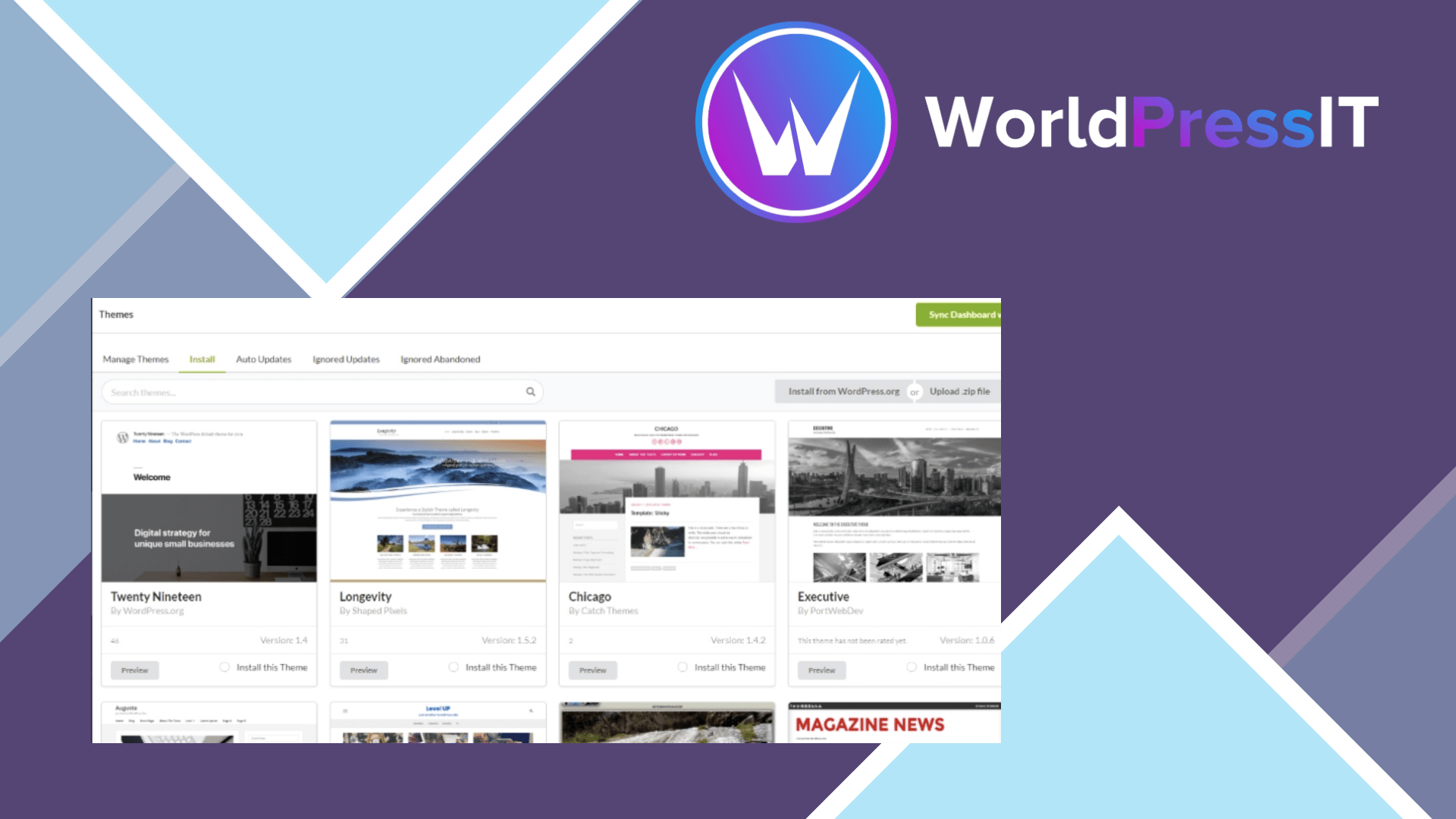
MainWP is worth it for the right kind of WordPress operator. It gives you a central dashboard for managing updates, plugins, themes, users, site health, security checks, notes, tags, and selected content tasks across multiple WordPress installations. The core system has no built-in site-count limit, so the practical ceiling is your dashboard hosting rather than an arbitrary licensing cap.
The architecture is both MainWP’s biggest advantage and its main warning sign. You install the Dashboard plugin on a separate WordPress site, then install MainWP Child on every site you want to control. MainWP explicitly recommends using a dedicated, clean WordPress installation instead of placing the dashboard on a production site. That gives you ownership of the data and avoids handing site-management credentials to a third-party SaaS, but it also means you are responsible for securing, updating, monitoring, and backing up the dashboard itself.
Where MainWP is genuinely strong
Bulk maintenance is the reason to buy into MainWP. You can update WordPress core, plugins, themes, and translations across selected sites or the whole portfolio, while trusted items can be configured for automatic updates and specific updates can be ignored. MainWP 5.1 introduced rollback support for failed plugin and theme updates, although the child sites need to run WordPress 6.3 or newer for that feature to work.
The extension system is another major strength. MainWP can connect with services and plugins such as UpdraftPlus, WPVivid, BackWPup, BackupBuddy, and several hosting providers for backup operations. There are also extensions for SEO, uptime monitoring, security, analytics, client reporting, and marketing. This modular approach keeps the base dashboard flexible and lets an agency build a workflow around tools it already uses.
Its value is especially clear when managing a growing portfolio. The WordPress.org plugin has a 4.9-star rating from more than 2,000 reviews, and recent reviews commonly praise the time saved by centralized management and the responsiveness of support. MainWP also supports CSV imports, site tags, health monitoring, security scans, and bulk reconnection when a child site loses contact.
Where it is weak or annoying
MainWP is not a plug-and-play hosted service. The separate dashboard installation adds server administration, security responsibilities, and another potential point of failure. If your clients use unrelated hosts or you simply want someone else to handle infrastructure, ManageWP and WP Umbrella are easier to start with. Community discussions repeatedly describe MainWP as powerful but less convenient when the priority is a polished cloud workflow.
Backups are also not one universal built-in system. You generally need an extension, a compatible backup plugin, or hosting-provider API access, and restores depend on that underlying integration. Premium functionality is spread across add-ons, so the total cost and complexity can rise as you reproduce the reporting, monitoring, backup, and security features bundled by competitors.
Compared with InfiniteWP, MainWP offers a broader modern extension ecosystem and a more active WordPress.org presence, but both require self-hosting. Compared with ManageWP, MainWP wins on control, privacy, and lack of a per-site dashboard limit; ManageWP wins on convenience and managed infrastructure. Compared with WP Umbrella, MainWP is more customizable but generally demands more setup and maintenance.
Verdict
Choose MainWP when you manage enough sites for bulk maintenance to save real time and you are willing to operate the dashboard yourself. Skip it for a small portfolio or a hands-off maintenance service. It is an excellent management foundation, but not the simplest all-in-one service.
Questions people ask
- Is MainWP free?
- The MainWP Dashboard and Child plugins are available free of charge, while premium add-ons and support access are offered through MainWP Pro plans.
- How many sites can MainWP manage?
- MainWP does not impose a fixed site limit. The practical limit depends on the hosting resources and configuration of your separate Dashboard installation.
- Does MainWP include backups?
- MainWP can manage backups through extensions for plugins such as UpdraftPlus and WPVivid, or through supported hosting-provider APIs. It is not a universal backup service by itself.
- Is MainWP better than ManageWP?
- MainWP is better if you want self-hosting, customization, and control over your data. ManageWP is usually better if you prefer a managed cloud dashboard with less infrastructure to maintain.
- Does MainWP automatically roll back failed updates?
- MainWP supports rollback for failed plugin and theme updates when the child site runs WordPress 6.3 or newer. It restores the version WordPress temporarily stored during the update.
Get MainWP: worth it for agencies that want control 5.1
Complete package, ready to install, via WorldPressIT.